Quick Info
Cold Winters
May-June
Mild Winters
April-May
Sun/Shade
Full sun
Sow Seeds
1 in. apart Barely cover
Days to Germinate
10-15 days
Mature Height
12-18 in.
Container Salvia
Bee Heaven
Bee Heaven
(Salvia coccinea)
Quick Info
Cold Winters
May-June
Mild Winters
April-May
Sun/Shade
Full sun
Sow Seeds
1 in. apart Barely cover
Days to Germinate
10-15 days
Mature Height
12-18 in.
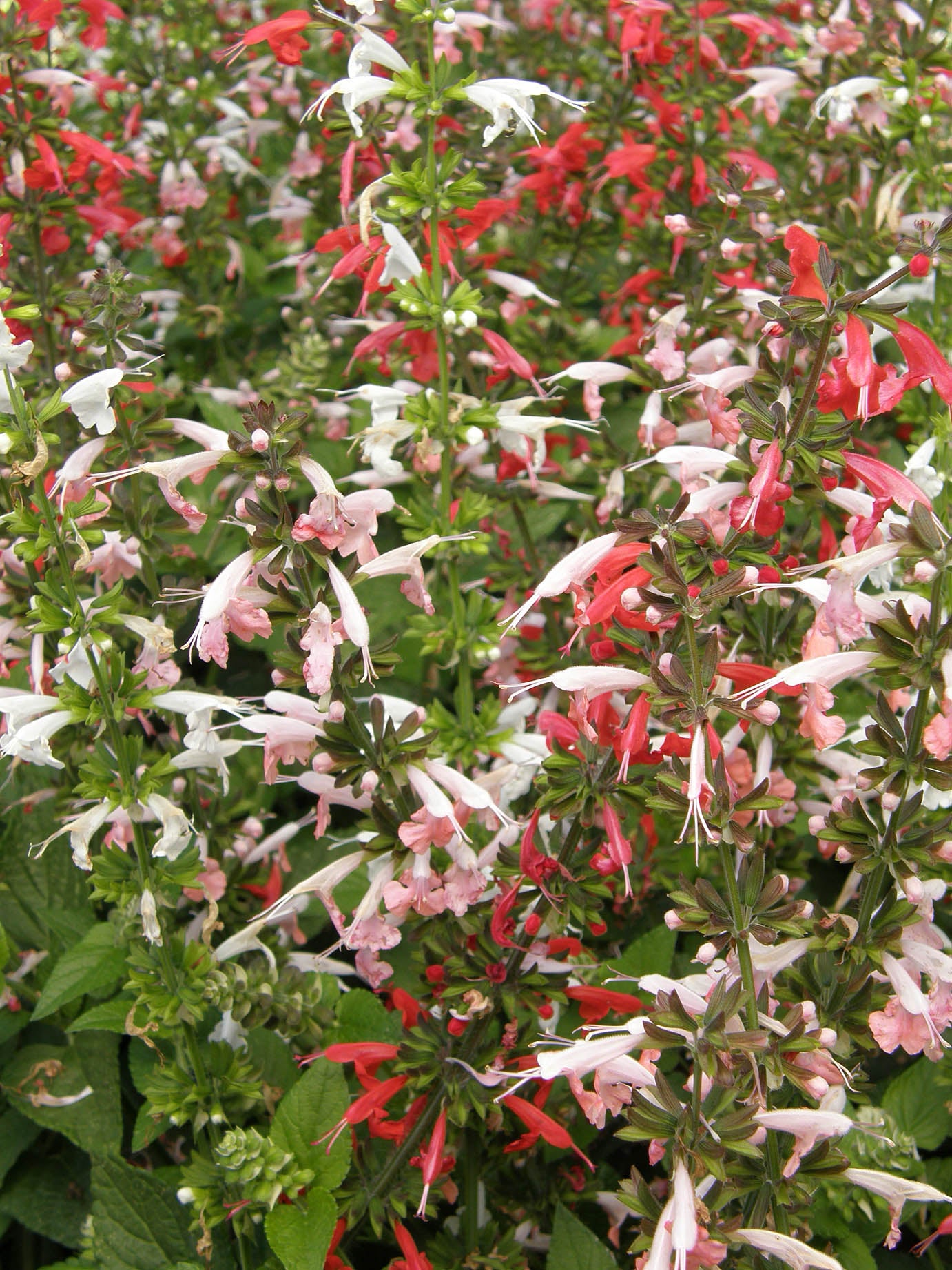
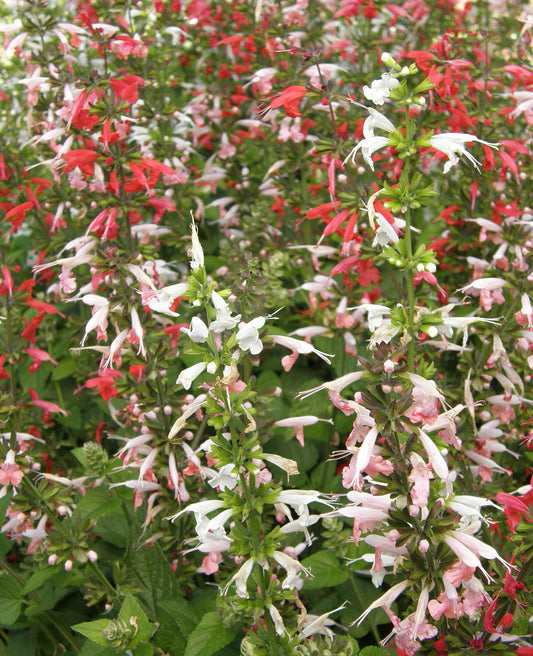
Our new variety is compact and earlier blooming than other Salvias, with clouds of nectar-rich, blossoms in a mix of white, soft pink and rose-red. Hummingbirds, butterflies and other pollinators flock to their blooms from dawn to dusk, and sprays of these charming flowers are lovely in mixed bouquets. Bee Heaven grows readily in a wide range of conditions and blooms continuously throughout summer. Ideal for containers or as easy-care, free-flowering border plants.
Seed Count: Approx. 34 / Weight: 50 mg
- SKU:5438
Couldn't load pickup availability
Share
Quick Info
Cold Winters
May-June
Mild Winters
April-May
Sun/Shade
Full sun
Sow Seeds
1 in. apart Barely cover
Days to Germinate
10-15 days
Mature Height
12-18 in.

Collapsible content
GROWING INSTRUCTIONS
Perennial
Summer/Fall bloom.
Hardy to USDA zone 8.
To Start Early Indoors
Start seeds indoors 4 to 6 weeks before last frost date. Sow seeds 1 inch apart in a container of seed starting mix and cover very lightly. Keep moist but not soggy and provide a strong light source. When seedlings are about 2 to 3 inches tall, and night temperatures are above 50°F (10°C), acclimate to outdoor conditions and plant 8 inches apart.
To Start Directly Outdoors
Sow in well-worked beds or in containers in full sun only after night temperatures reach 50°F (10°C). Plant seeds 4 inches apart and cover very lightly. Keep soil evenly moist. Thin seedlings to 8 inches apart so plants have room to mature.
Container Planting
Plant 4 seedlings in a 20 inch pot; 3 in a 16 inch pot, and 1 seedling in an 8 inch pot.
Growing Notes
Plants grow quickly to 12-18 inches tall and bloom all summer long. Honeybees, hummingbirds, butterflies, and many other pollinators constantly visit these nectar-rich flowers.