

Use a properly drained soil mix - don't use garden
soil for containers! A good commercial potting mix will give
consistent drainage, is free of weeds and pests, and it won't compact
to a rock-hard mass that water can't penetrate by mid summer. I always
replenish the soil mix for containers at the beginning of each season
to restore the tilth of the soil in my pots and ensure the best
conditions for young plants.
Gardening in containers isn't very complex or complicated. Start by using the
right sized containers for plants you mean to grow through the
summer. Containers can be whatever suits your eye and pocket book,
from fancy big clay pots, lightweight pots, and
window boxes, to wine barrels, recycled pulp containers, wooden boxes
or even big drain tiles you may have available. Just be sure you have
large enough containers to hold the full-grown plants and their root
systems and provide good drainage, air circulation, and season-long
root space
Water and Fertilize
Water and remove spent blooms on container plants
regularly and make it a part of your everyday routine. In the heat of
summer, containers may need water every day. I put my forefinger in
the soil and if it is dry beyond the first joint, I water immediately.
Feed your container plants throughout the season with strength
liquid fertilizer solution, applying it to the soil about every 3
weeks. ( Being an organic gardener, I use a mix of equal parts of
diluted liquid fish emulsion and kelp, and recommend it.) I also
adjust for the blast of summer heat by keeping my containers on
casters so I can move them around. You should be able to find these
little wooden or plastic platforms to set your plants on - square or
round and fitted with wheeled casters - at a local nursery. Another
advantage is that the platforms keep containers from staining the
patio (or deck). And, if I go away for the weekend, the containers can
easily be wheeled and grouped in a cooler, shadier space so they won't
dry out while I'm away.
Container Herbs
Even though I grow an extensive backyard herb garden, I
still plant my favorites for everyday use in 4 or 5 pots set outside
the kitchen patio so I can get to them quickly whenever a recipe needs
a little herbal zing. Best of all, container herbs need little weeding
and no hoeing and can be moved easily. I always plant several kinds of
basils in a big deep pot so I can use them in salads and sauts
and, late in summer when they start to flower, I enjoy them as
fragrant ornamental edibles.
Strappy mounds of
flowering
chives
and garlic chives or
shiny broadleaf
parsley are also
delicious and attractive container plants as are low mounding shrubby
perennials such as
thyme,
oregano, and
marjoram.
Blue-green leafy
dill fronds are pretty as a picture and in a
nearby container you can snip them off to top salads and stews
anytime. I grow clumps of
cilantro in containers to add to
grilled shrimp, chicken or mix into fresh salsa, keeping them in clear
bright shade rather than full sunlight in the heat of summer so the
plants stay leafy as long as possible. My "outdoor room" is especially
fragrant with the blooms of my
container lavenders.
Container Flowers
Free-flowering annuals are perfect choices to bring out
the artist in every gardener. Choose varieties not only for their
individual beauty but for the way they'll look in combination. Look
for flowers that spread and mound in habit like
cascading
nasturtiums, soft
alyssum, perky
pansies or old
fashioned varieties that have a wonderful perfume, such as
heliotrope or dwarf Cupid or Color Palette
Sweet Peas.
Don't miss low growing varieties of
zinnias such as Pixie
Sunshine, marigolds,
phlox,
dwarf
cosmos and dwarf
bedding sunflowers.
Little
Angel Wings roses or
delicious
Alpine strawberries are wonderful in containers.
You can plant one
variety to a container and cluster them all around your patio to take
advantage of different microclimates 3 medium sized pots placed
together will make a beautiful combination of color and form. Or you
can plant a mixed bouquet of 3 or 4 plants in a big container
at least 18 inches wide. In combining flowers, keep their final
heights in mind, planting low trailing plants at the outer edge,
medium ones inside and the tallest varieties at the center. Space
plants closely, about 4 inches apart, so they will grow to cover the
container's surface. Be sure to feed them regularly to
encourage lush growth.
Container Vegetables
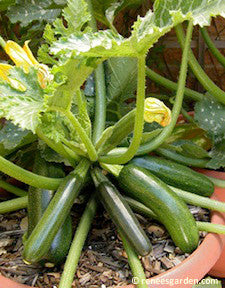
Growing an edible container garden is easy and rewarding.
Tomatoes,
peppers,
eggplants,
chiles,
cucumbers,
beans, and
squash
will reward you with beautiful plants and abundant harvests in warm
weather. In the cooler seasons of spring and fall, you can grow all
kinds of glorious salad fixings or nutritious leafy greens like
pak
choi, chard and
kale -- all are wonderful ornamental
edibles.
Container veggies need a good rich soil mix, and plenty of room for
an ample root system with careful attention to regular watering and
fertilizing. Their attractive foliage and colorful harvests are
decorative as well as delicious!
Moveable feasts of color
Consider
your container plants as design accessories of your "outdoor rooms"; move them
around through the season and rearrange them as suits your fancy or their need
for sun or shade all season and place them where you'll enjoy them most to
enjoy a new flush of bloom or scent. I love to have blooming, leafy containers
next to my patio and lawn chairs, on my picnic table and along my daily
pathways to delight all my senses throughout the gardening season.
Click
here for a list of Renee's Garden Varieties suitable
for containers
Shop
for Seeds |
Shipping
|
Privacy
Policy/Security |
Our Guarantee
|
Home
email:
customerservice@reneesgarden.com
phone: 1-888-880-7228
6060 Graham
Hill Rd. Felton, CA 95018
© 2013 Renee's Garden